Category: Uncategorized

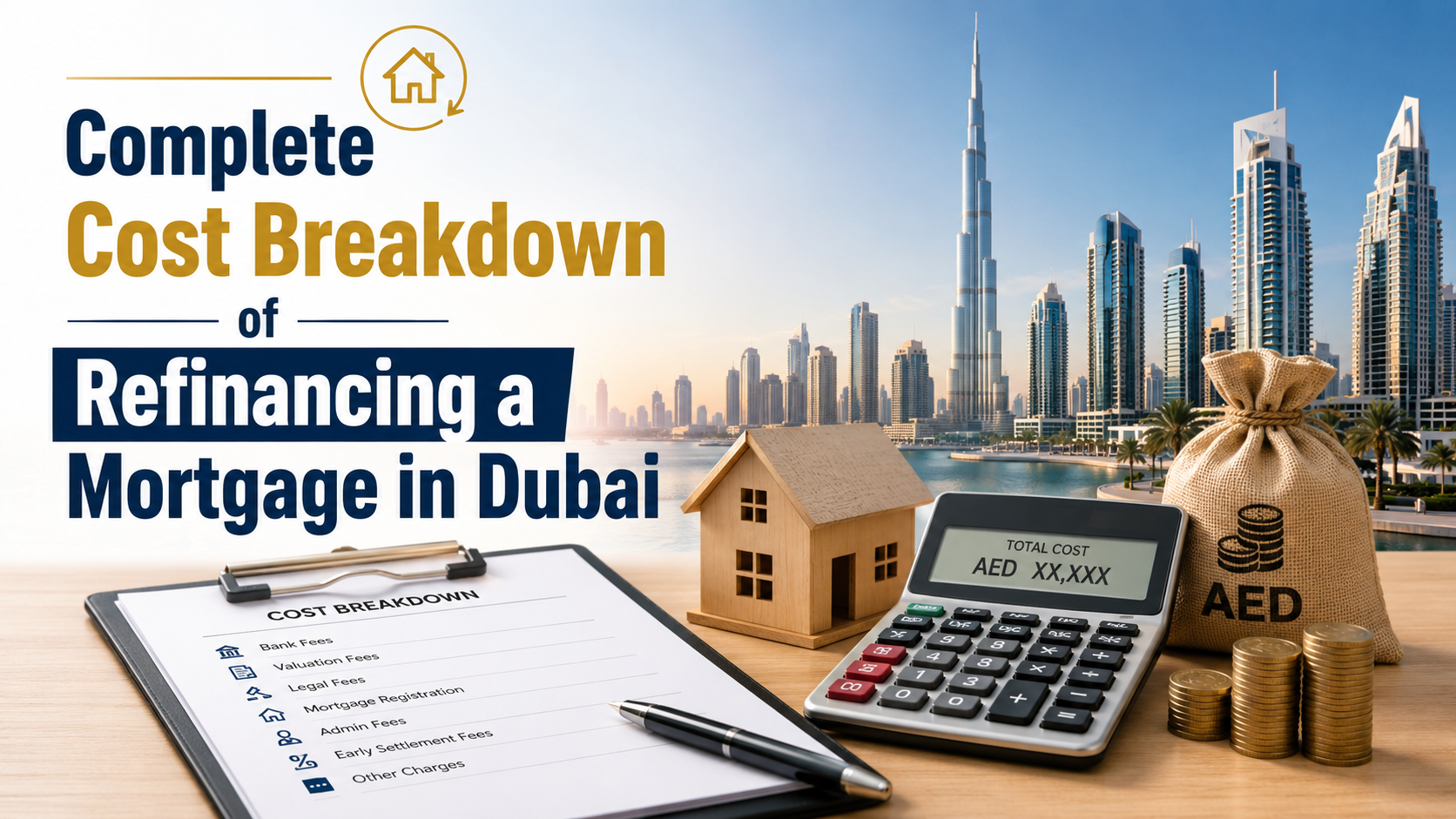
  • Complete Cost Breakdown of Refinancing a Mortgage in Dubai

    Complete Cost Breakdown of Refinancing a Mortgage in Dubai

    Introduction

    Refinancing a mortgage in Dubai can reduce monthly payments, secure a lower interest rate, improve cash flow, or consolidate financial obligations. However, many borrowers focus exclusively on interest savings and overlook the transaction costs involved.

    Understanding the full cost structure is essential because refinancing expenses can materially affect the overall financial benefit. Depending on the lender, property value, loan size, and refinancing objective, costs can range from relatively modest administrative charges to several thousand dirhams.

    This guide explains every major refinancing cost, how each fee works, and how to evaluate whether refinancing makes financial sense.


    Featured Snippet Answer

    What does it cost to refinance a mortgage in Dubai?

    Refinancing a mortgage in Dubai typically involves:

    • Property valuation fees
    • Mortgage registration fees
    • Bank processing fees
    • Early settlement charges on the existing mortgage
    • Life insurance adjustments
    • Property insurance requirements
    • Administrative and transfer-related costs

    The total refinancing cost varies depending on the lender and loan amount, but borrowers should calculate all fees against projected interest savings before proceeding.


    Key Takeaways

    • Refinancing is not free and involves multiple transaction costs.
    • Early settlement fees are often among the largest expenses.
    • Property valuation is typically required by the new lender.
    • Mortgage registration charges can significantly affect total cost.
    • Lower interest rates do not automatically guarantee overall savings.
    • A break-even analysis is essential before refinancing.
    • Comparing offers from multiple lenders can materially reduce costs.

    Why Homeowners Refinance Mortgages in Dubai

    Common motivations include:

    • Securing a lower interest rate
    • Reducing monthly repayments
    • Switching from variable to fixed rates
    • Accessing equity
    • Improving cash flow
    • Consolidating liabilities
    • Changing mortgage terms

    Complete Cost Breakdown

    1. Early Settlement Fee

    When refinancing, the original mortgage is usually paid off before maturity.

    What it covers

    • Administrative costs associated with closing the existing loan

    Potential impact

    • Can be one of the largest refinancing expenses
    • May reduce expected savings from a lower interest rate

    Questions to ask

    • What is the exact settlement charge?
    • Is there a maximum fee cap?
    • Are there additional closure costs?

    2. Property Valuation Fee

    The new lender typically requires an updated valuation.

    Purpose

    • Determines current market value
    • Assesses lending risk
    • Calculates loan-to-value ratio

    Typical considerations

    • Property type
    • Property location
    • Valuation provider
    • Complexity of the assessment

    3. Mortgage Registration Fees

    A refinanced mortgage generally requires registration of the new facility.

    Why it exists

    • Legal recording of the lender’s security interest

    Factors affecting cost

    • Mortgage amount
    • Applicable registration requirements
    • Administrative processing charges

    4. Bank Processing Fee

    Most lenders charge a processing or arrangement fee.

    Covers

    • Application review
    • Underwriting
    • Credit assessment
    • Documentation review

    May vary based on

    • Loan amount
    • Borrower profile
    • Promotional offers
    • Bank policy

    5. Property Insurance Costs

    Many lenders require property insurance.

    May include

    • Building coverage
    • Structural damage protection
    • Fire-related coverage

    Considerations

    • Existing policy transfer options
    • Premium differences between providers
    • Lender-specific requirements

    6. Life Insurance Requirements

    Mortgage lenders often require borrower protection coverage.

    Influencing factors

    • Age
    • Loan amount
    • Health disclosures
    • Coverage structure

    Important questions

    • Can an existing policy be transferred?
    • Is lender-provided insurance mandatory?
    • Are premiums fixed or variable?

    7. Administrative Charges

    Additional operational fees may apply.

    Examples include:

    • Document processing
    • Account closure fees
    • Statement issuance fees
    • Mortgage release documentation
    • Legal administration costs

    8. Broker Fees (If Applicable)

    Borrowers using mortgage brokers may incur advisory charges.

    Potential benefits

    • Access to multiple lenders
    • Negotiation assistance
    • Documentation support

    Important consideration

    Evaluate whether projected savings justify the broker cost.


    Hidden Costs Borrowers Often Miss

    Many refinancing decisions underestimate secondary expenses.

    Potential overlooked costs include:

    • Insurance adjustments
    • Revaluation requirements
    • New documentation expenses
    • Administrative service fees
    • Delays causing rate changes
    • Opportunity costs during processing

    Mortgage Refinancing Cost Comparison Table

    Cost CategoryPurposeUsually Required?Potential Financial Impact
    Early Settlement FeeClose existing mortgageYesHigh
    Property ValuationDetermine property valueUsuallyModerate
    Registration FeeRegister new mortgageYesHigh
    Processing FeeLoan administrationYesModerate
    Property InsuranceAsset protectionUsuallyModerate
    Life InsuranceBorrower protectionOftenModerate
    Administrative FeesDocumentation & servicingOftenLow to Moderate
    Broker FeeAdvisory servicesOptionalVariable

    How to Calculate Whether Refinancing Is Worth It

    Step 1: Calculate Total Refinancing Costs

    Add:

    • Settlement fees
    • Registration charges
    • Valuation fees
    • Processing fees
    • Insurance costs
    • Other administrative expenses

    Step 2: Estimate Annual Savings

    Calculate:

    • Current mortgage cost
    • New mortgage cost
    • Monthly payment difference

    Step 3: Determine Break-Even Point

    Formula:

    Break-Even Period = Total Refinancing Costs ÷ Monthly Savings

    Example

    ItemAmount
    Total Refinancing CostsAED 12,000
    Monthly SavingsAED 600
    Break-Even Period20 Months

    If the borrower plans to keep the property beyond the break-even period, refinancing may be financially beneficial.


    Advantages of Refinancing

    BenefitPotential Impact
    Lower Interest RateReduced borrowing cost
    Lower Monthly PaymentImproved cash flow
    Better Loan StructureGreater predictability
    Debt ConsolidationSimplified finances
    Equity AccessIncreased liquidity

    Risks and Drawbacks

    RiskExplanation
    High Upfront CostsCan offset savings
    Longer Loan TermMay increase lifetime interest
    Approval RiskNew lender may decline application
    Market ChangesFuture rate movements may alter outcomes
    Additional Insurance CostsHigher recurring expenses

    Common Refinancing Mistakes

    • Comparing interest rates only
    • Ignoring settlement fees
    • Overlooking insurance costs
    • Extending loan terms unnecessarily
    • Failing to calculate break-even periods
    • Accepting the first lender offer
    • Not reviewing all documentation

    Evidence-Based Financial Insight

    A refinancing decision should be evaluated using a total-cost-of-borrowing approach, not simply by comparing advertised interest rates. Borrowers who calculate lifetime interest savings, transaction costs, and expected ownership duration generally make more informed refinancing decisions than those focusing solely on monthly payment reductions.


    Internal Linking Opportunities

    Consider linking this article to:

    • Fixed vs Variable Mortgage Rates in Dubai
    • Mortgage Registration Fees Explained
    • How Loan-to-Value Ratios Affect Home Financing
    • Mortgage Prepayment Penalties Guide
    • Property Valuation Process in the UAE
    • First-Time Home Buyer Mortgage Guide
    • Mortgage Insurance Explained

    Frequently Asked Questions

    1. Is refinancing a mortgage in Dubai worth it?

    It can be worthwhile if projected interest savings exceed refinancing costs and the homeowner expects to keep the property long enough to pass the break-even point.

    2. What is the biggest refinancing expense?

    For many borrowers, early settlement charges and mortgage registration fees represent the most significant costs.

    3. Do I need a new property valuation when refinancing?

    Most lenders require a current valuation to assess property value and lending risk.

    4. Can I refinance with a different bank?

    Yes. Many borrowers refinance specifically to obtain more competitive terms from another lender.

    5. Will refinancing affect my monthly payment?

    Potentially. Lower rates or extended terms may reduce monthly payments, although overall borrowing costs should also be considered.

    6. How long does mortgage refinancing usually take?

    Timelines vary based on lender requirements, documentation, property valuation, and approval processes.

    7. Should I use a mortgage broker?

    A broker may help compare options and negotiate terms, but borrowers should evaluate whether the benefits justify any associated fees.

    8. Can refinancing increase total interest paid?

    Yes. Extending the repayment period may lower monthly payments while increasing total lifetime interest.


    Conclusion

    Refinancing a mortgage in Dubai can deliver meaningful financial benefits, particularly when interest rates improve or more favorable lending terms become available. However, the decision should never be based solely on a lower advertised rate.

    A comprehensive evaluation should include settlement charges, valuation costs, registration fees, processing expenses, insurance requirements, and the expected break-even period. Borrowers who analyze the full cost structure are better positioned to determine whether refinancing will genuinely improve their long-term financial outcome.


    Disclaimer

    This article is provided for educational and informational purposes only and does not constitute financial, legal, tax, or mortgage advice. Mortgage products, fees, regulatory requirements, and lender policies can change over time. Individuals should consult qualified mortgage professionals, financial advisers, or legal advisers before making refinancing decisions.

  • Navigating Property Inheritance Laws for Expats in the UAE

    Navigating Property Inheritance Laws for Expats in the UAE


    Introduction

    For expatriates who own real estate in the United Arab Emirates, inheritance planning is often overlooked until a major life event occurs. Yet property succession can significantly affect surviving spouses, children, and other beneficiaries.

    The UAE has modernized its legal framework over recent years, providing greater flexibility for non-Muslim expatriates to determine how their assets are distributed after death. However, the interaction between wills, probate procedures, property ownership structures, and local legal requirements remains complex.

    Understanding these rules can help expatriates protect family members, reduce administrative delays, and ensure that property is transferred according to their wishes.


    Featured Snippet Answer

    Can expats pass UAE property to their chosen heirs?

    Yes. In many cases, expatriates can determine how their UAE property is distributed through a properly drafted and legally recognized will. Without appropriate estate planning, inheritance proceedings may become more complicated, potentially resulting in outcomes that differ from the deceased’s intentions.


    Key Takeaways

    • UAE inheritance planning is important for all expatriate property owners.
    • A legally valid will can provide greater certainty regarding asset distribution.
    • Different rules may apply depending on religion, nationality, property type, and location.
    • Probate procedures may require court involvement and supporting documentation.
    • Estate planning should be reviewed after marriage, divorce, births, deaths, or major property acquisitions.
    • Professional legal advice is often beneficial for cross-border estates.

    Understanding Property Inheritance in the UAE

    Property inheritance refers to the legal process through which ownership rights pass from a deceased individual to beneficiaries.

    For expatriates, inheritance planning may involve:

    • Residential properties
    • Commercial real estate
    • Jointly owned assets
    • Bank accounts linked to property transactions
    • Investment properties
    • Overseas assets connected to UAE estates

    Because many expatriates maintain ties to multiple countries, estate administration frequently involves cross-border legal considerations.


    Why Inheritance Planning Matters for Expats

    Without a clear succession plan, families may face:

    • Delays in property transfers
    • Probate proceedings
    • Asset freezes during estate administration
    • Documentation challenges
    • Jurisdictional conflicts between countries

    Advance planning can help minimize uncertainty and improve estate administration efficiency.


    Key Factors Affecting Inheritance Outcomes

    1. Expatriate Status

    Inheritance treatment may differ depending on:

    • Nationality
    • Residency status
    • Religious affiliation
    • Location of assets

    2. Existence of a Valid Will

    A properly executed will often serves as the foundation of estate planning.

    3. Property Ownership Structure

    Ownership arrangements can affect succession procedures, including:

    • Sole ownership
    • Joint ownership
    • Corporate ownership structures
    • Trust or holding arrangements where legally applicable

    4. Asset Location

    Properties located in different jurisdictions may be subject to separate probate requirements.


    The Role of Wills in UAE Estate Planning

    A will allows an individual to specify:

    • Beneficiaries
    • Asset distribution instructions
    • Guardianship arrangements for children
    • Executor appointments

    Common reasons expats create wills include:

    • Protecting spouses
    • Providing for children
    • Preventing family disputes
    • Clarifying inheritance intentions

    Common Estate Planning Documents

    DocumentPrimary PurposeImportance
    WillAsset distribution instructionsHigh
    Property ownership recordsEstablish ownershipHigh
    Passport copiesIdentity verificationHigh
    Marriage certificatesFamily relationship evidenceMedium
    Birth certificatesBeneficiary verificationMedium
    Power of attorney (where applicable)Limited estate planning supportMedium

    Probate Process for UAE Property

    Probate generally involves:

    1. Notification of death
    2. Collection of supporting documents
    3. Court or legal authority review
    4. Appointment of estate representatives where required
    5. Asset identification
    6. Debt settlement
    7. Distribution to beneficiaries
    8. Property title transfer

    Processing times vary depending on:

    • Estate complexity
    • Number of beneficiaries
    • International documentation requirements
    • Legal disputes

    Potential Challenges Expats Face

    Cross-Border Estates

    Many expatriates own assets in multiple countries.

    This can create issues involving:

    • Conflicting legal systems
    • Different probate procedures
    • Tax considerations abroad
    • Foreign court recognition requirements

    Documentation Delays

    Common challenges include:

    • Missing records
    • Translation requirements
    • Authentication procedures
    • International document legalization

    Family Disputes

    Disagreements may arise regarding:

    • Property valuation
    • Beneficiary rights
    • Executor decisions
    • Interpretation of estate documents

    Estate Planning Strategies for Expats

    Create a Legally Recognized Will

    A professionally drafted will can help clarify inheritance intentions.

    Maintain Updated Records

    Keep copies of:

    • Property title deeds
    • Mortgage documentation
    • Ownership agreements
    • Insurance policies
    • Beneficiary information

    Review Plans Regularly

    Update estate plans after:

    • Marriage
    • Divorce
    • Birth of children
    • Death of beneficiaries
    • Major property purchases

    Coordinate International Assets

    Where assets exist in multiple countries, coordinated legal planning may help reduce conflicts between jurisdictions.


    Property Ownership Structures and Inheritance Considerations

    Ownership TypePotential AdvantagesPotential Considerations
    Sole OwnershipSimple ownership structureProbate may be required
    Joint OwnershipMay simplify succession in some circumstancesOwnership terms matter
    Corporate OwnershipAsset separationAdditional compliance requirements
    Investment StructuresStrategic planning opportunitiesGreater legal complexity

    Common Misconceptions

    Myth: A Will Is Only Necessary for Wealthy Individuals

    Reality: Any property owner can benefit from documented inheritance instructions.

    Myth: Overseas Wills Always Cover UAE Property

    Reality: Cross-border recognition may vary depending on legal circumstances.

    Myth: Estate Planning Is a One-Time Task

    Reality: Estate plans should be reviewed periodically.


    Risk Assessment Table

    RiskPotential ImpactMitigation Strategy
    No willUncertainty regarding distributionCreate a valid will
    Outdated documentsAdministrative delaysReview regularly
    Multiple jurisdictionsLegal complexityCoordinate legal planning
    Missing ownership recordsTransfer complicationsMaintain organized records
    Family disputesProbate delaysClearly document intentions

    Frequently Asked Questions

    What happens to UAE property when an expatriate dies?

    The property typically becomes part of the deceased’s estate and is transferred through applicable inheritance and probate procedures.

    Do expats need a UAE will?

    While not always mandatory, a properly drafted will can provide greater clarity regarding asset distribution.

    Can foreign wills apply to UAE property?

    In some circumstances they may be relevant, but recognition and enforcement depend on legal requirements and individual circumstances.

    Should spouses be included in estate planning?

    Yes. Estate plans commonly address spousal rights and financial protection.

    How often should a will be updated?

    Many advisors recommend reviewing estate plans after major life changes or every few years.

    Can multiple properties be included in one estate plan?

    Yes. Estate plans often cover several assets, although cross-border holdings may require additional planning.

    Is legal advice necessary?

    Complex estates, international assets, family businesses, and high-value property portfolios often benefit from professional legal guidance.


    Internal Linking Opportunities

    Suggested related content:

    • UAE Property Ownership Rules for Expats
    • Buying Real Estate in Dubai: Legal Checklist
    • UAE Probate Process Explained
    • Estate Planning for International Families
    • Property Transfer Procedures in the UAE
    • Joint Property Ownership in the UAE
    • Cross-Border Succession Planning Guide

    Conclusion

    Property inheritance planning is a critical component of long-term wealth protection for expatriates in the UAE. While the country’s legal framework has evolved to provide greater flexibility for non-Muslim residents, effective estate planning still requires careful consideration of wills, ownership structures, probate procedures, and cross-border legal issues.

    By maintaining current estate documents, reviewing plans regularly, and seeking qualified legal guidance when appropriate, expatriates can help ensure that their property is transferred efficiently and according to their intentions.


    Disclaimer

    This article is provided for educational and informational purposes only and should not be considered legal, financial, tax, or estate-planning advice. Laws, regulations, and procedures may change over time and can vary based on individual circumstances. Readers should consult qualified UAE legal professionals and estate-planning advisors before making decisions regarding inheritance, wills, probate, or property ownership.

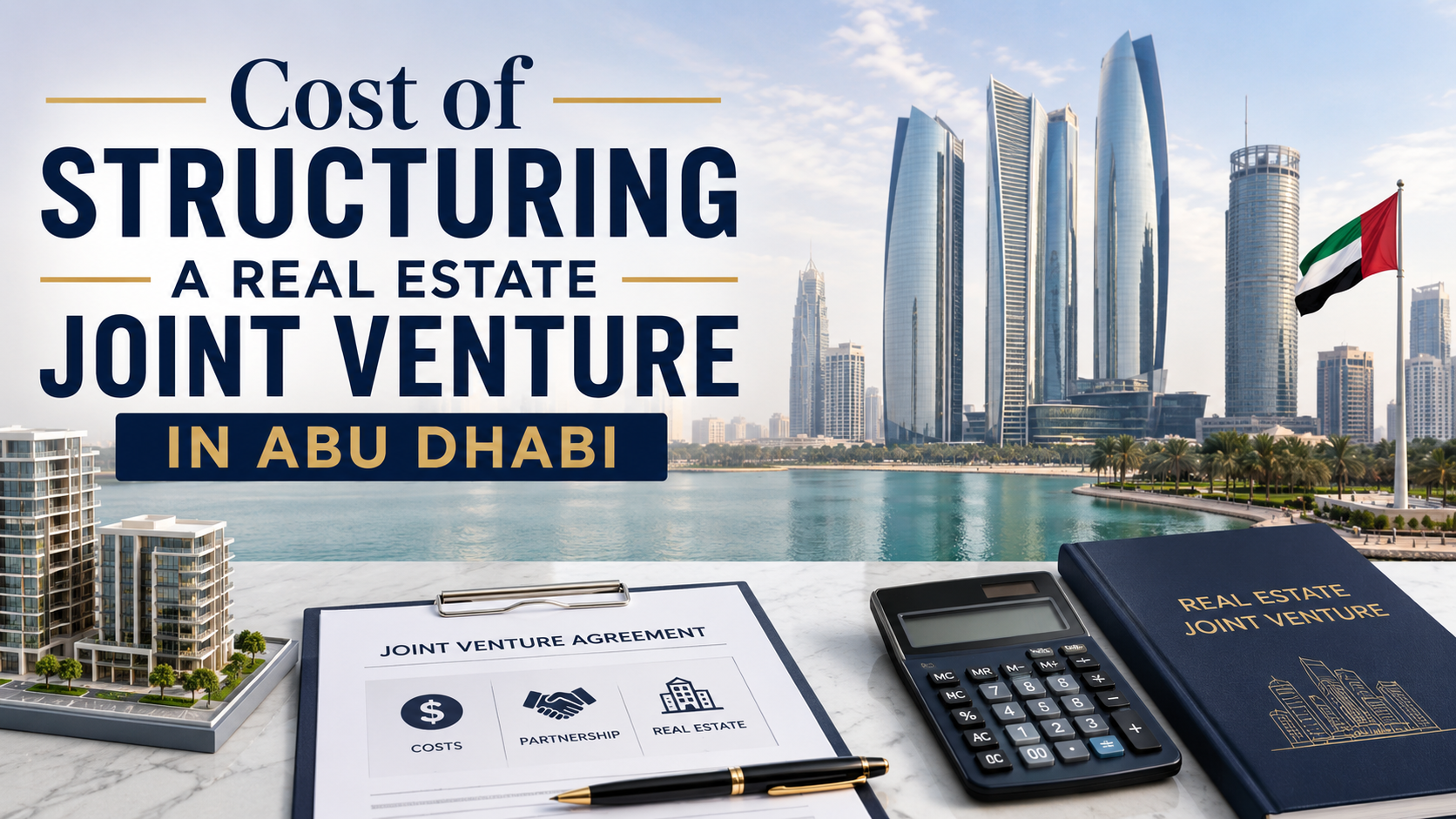
  • Cost of Structuring a Real Estate Joint Venture in Abu Dhabi: Complete 2026 Guide

    Cost of Structuring a Real Estate Joint Venture in Abu Dhabi: Complete 2026 Guide

    Introduction

    Real estate joint ventures (JVs) have become a common vehicle for property development, investment, asset management, and large-scale real estate acquisitions in Abu Dhabi. By combining capital, expertise, land ownership, development capabilities, or market access, investors can reduce individual risk while pursuing larger opportunities.

    However, many investors underestimate the actual cost of structuring a real estate joint venture. Beyond legal drafting, expenses can include regulatory approvals, due diligence investigations, valuation reports, licensing requirements, governance frameworks, and ongoing compliance obligations.

    Understanding these costs before negotiations begin helps investors avoid delays, budget overruns, and disputes later in the project lifecycle.


    Featured Snippet Answer

    The cost of structuring a real estate joint venture in Abu Dhabi typically depends on the project’s size, complexity, ownership structure, regulatory requirements, and legal documentation needs. Common expenses include legal advisory fees, due diligence costs, valuation reports, corporate structuring fees, regulatory filings, accounting support, and ongoing compliance obligations. More complex cross-border or institutional transactions generally require higher professional advisory budgets than straightforward local partnerships.


    Key Takeaways

    • Real estate JVs can involve significant professional and compliance costs.
    • Legal documentation is often the largest structuring expense.
    • Due diligence helps identify ownership, title, and regulatory risks.
    • Cross-border investors typically face additional structuring requirements.
    • Governance provisions can reduce future disputes among partners.
    • Ongoing compliance costs should be included in long-term budgeting.
    • Early professional advice may reduce costly restructuring later.

    What Is a Real Estate Joint Venture?

    A real estate joint venture is a business arrangement in which two or more parties collaborate on a property-related investment or development project.

    Common structures include:

    • Landowner and developer partnerships
    • Investor consortiums
    • Property acquisition ventures
    • Mixed-use development projects
    • Hospitality and tourism developments
    • Commercial asset management partnerships

    Typical contributions may include:

    Contribution TypeExample
    CapitalEquity funding
    LandDevelopment site
    ExpertiseDevelopment management
    OperationsProperty management
    Market AccessTenant acquisition and leasing

    Main Cost Components of Structuring a Real Estate Joint Venture

    1. Legal Structuring Fees

    Legal advisors typically assist with:

    • Joint venture agreements
    • Shareholder agreements
    • Governance frameworks
    • Exit provisions
    • Profit-sharing arrangements
    • Dispute resolution clauses

    Complexity factors include:

    • Multiple investors
    • Foreign ownership participation
    • Institutional investors
    • Multi-asset portfolios
    • Development financing arrangements

    2. Due Diligence Costs

    Comprehensive due diligence may cover:

    Property Due Diligence

    • Ownership verification
    • Title review
    • Encumbrance checks
    • Development rights review
    • Lease obligations

    Corporate Due Diligence

    • Shareholder analysis
    • Financial review
    • Litigation screening
    • Regulatory compliance assessment

    Technical Due Diligence

    • Engineering reports
    • Structural assessments
    • Environmental reviews
    • Infrastructure assessments

    3. Property Valuation Expenses

    Independent valuations may be required to:

    • Determine contribution values
    • Support financing applications
    • Establish fair equity allocations
    • Assist negotiations among partners

    Valuation complexity often increases for:

    • Development land
    • Hospitality assets
    • Mixed-use projects
    • Income-generating commercial properties

    4. Corporate Formation and Registration Costs

    Depending on the chosen structure, investors may incur costs related to:

    • Company incorporation
    • Trade licensing
    • Regulatory registrations
    • Corporate documentation
    • Share issuance documentation

    Potential structures include:

    StructureTypical Use Case
    Limited Liability CompanyOperational ventures
    Special Purpose Vehicle (SPV)Single-asset ownership
    Holding CompanyMulti-project portfolios
    Free Zone EntityCertain investment structures

    5. Regulatory and Compliance Costs

    Investors may need to budget for:

    • Corporate compliance reviews
    • Ultimate beneficial ownership disclosures
    • Anti-money laundering compliance
    • Record-keeping requirements
    • Annual corporate maintenance

    Regulatory requirements can vary depending on:

    • Investor nationality
    • Ownership structure
    • Financing arrangements
    • Nature of the development project

    Factors That Influence Joint Venture Structuring Costs

    Transaction Size

    Larger transactions generally require:

    • More extensive due diligence
    • Additional legal documentation
    • Enhanced governance mechanisms

    Number of Investors

    Multi-party ventures often involve:

    • Complex voting arrangements
    • Detailed decision-making procedures
    • Enhanced dispute-resolution frameworks

    Cross-Border Participation

    International investors may require:

    • Additional legal opinions
    • Cross-border tax reviews
    • Foreign ownership assessments
    • International compliance evaluations

    Financing Complexity

    Debt-financed developments often require:

    • Lender reviews
    • Security documentation
    • Financial covenant negotiations

    Risk Assessment Before Forming a Joint Venture

    Risk AreaPotential Concern
    GovernanceDeadlock situations
    FundingCapital call disputes
    RegulatoryCompliance failures
    DevelopmentConstruction delays
    MarketDemand fluctuations
    Exit StrategyLiquidity limitations

    Essential Joint Venture Agreement Provisions

    A well-drafted JV agreement commonly addresses:

    • Capital contributions
    • Ownership percentages
    • Voting rights
    • Profit distributions
    • Management authority
    • Deadlock resolution
    • Default remedies
    • Exit mechanisms

    Failure to address these issues early may increase future litigation risk.


    Comparing Structuring Approaches

    ApproachAdvantagesChallenges
    Simple PartnershipFaster setupLimited governance controls
    LLC-Based JVStronger legal frameworkHigher setup complexity
    SPV StructureAsset segregationAdditional administration
    Holding Company StructurePortfolio flexibilityMore compliance obligations

    Tax and Financial Considerations

    Investors should evaluate:

    • UAE corporate tax implications
    • Cross-border tax exposure
    • Financing structures
    • Profit distribution mechanisms
    • Transfer pricing considerations where applicable

    Because tax treatment varies significantly based on facts and ownership arrangements, specialized tax advice is often advisable before implementation.


    Common Mistakes That Increase Structuring Costs

    Insufficient Due Diligence

    Can lead to:

    • Unexpected liabilities
    • Regulatory issues
    • Contract disputes

    Poor Governance Design

    May result in:

    • Management conflicts
    • Delayed decisions
    • Costly litigation

    Unclear Exit Planning

    Can create:

    • Investor disputes
    • Valuation disagreements
    • Sale complications

    Inadequate Documentation

    Often causes:

    • Enforcement difficulties
    • Financing delays
    • Operational uncertainty

    Cost-Control Strategies

    Investors can potentially reduce unnecessary expenses by:

    • Conducting preliminary feasibility assessments
    • Defining partner roles early
    • Using experienced advisors
    • Establishing clear governance structures
    • Performing comprehensive due diligence before signing

    Frequently Asked Questions

    How much does it cost to structure a real estate joint venture in Abu Dhabi?

    Costs vary widely based on transaction complexity, investor profile, legal requirements, and regulatory considerations. Professional advisory fees are usually the primary expense category.

    Is a special purpose vehicle necessary for a property JV?

    Not always. However, SPVs are commonly used to isolate risk and hold specific assets.

    Can foreign investors participate in Abu Dhabi real estate joint ventures?

    Foreign participation may be possible depending on the project location, ownership framework, and applicable regulations.

    What is the biggest cost driver in most JV structures?

    Legal drafting, negotiation, and due diligence frequently represent the most significant structuring expenses.

    Why is due diligence important before forming a JV?

    It helps identify ownership issues, financial risks, regulatory concerns, and operational liabilities before commitments are made.

    Should investors obtain independent valuation reports?

    Independent valuations can support fair negotiations and reduce disputes regarding asset contributions.

    What happens if partners disagree after formation?

    A properly drafted JV agreement should contain dispute resolution and deadlock-management provisions.

    Are ongoing compliance costs significant?

    They can be, especially for larger projects involving multiple investors, financing arrangements, or international stakeholders.


    Internal Linking Opportunities

    Suggested related content:

    • Abu Dhabi Property Investment Guide
    • UAE Corporate Tax for Real Estate Investors
    • Special Purpose Vehicles in the UAE
    • Real Estate Due Diligence Checklist
    • Foreign Ownership Rules in Abu Dhabi
    • Property Development Risk Management
    • Shareholder Agreement Best Practices

    Conclusion

    Structuring a real estate joint venture in Abu Dhabi involves more than simply bringing investors together. Legal documentation, due diligence, corporate structuring, governance design, valuation support, and ongoing compliance all contribute to the overall cost profile.

    Investors who budget comprehensively and engage qualified legal, financial, and regulatory advisors early in the process are generally better positioned to manage risk, improve transparency, and support long-term project success.


    Disclaimer

    This article is provided for general informational and educational purposes only and does not constitute legal, tax, investment, financial, or regulatory advice. Real estate joint venture structures vary substantially based on transaction details, ownership arrangements, financing methods, and applicable UAE regulations. Investors should seek advice from qualified legal, tax, accounting, and real estate professionals before making decisions or entering into any joint venture arrangement.

  • Best Escrow Agents in Dubai for Secure Property Transactions

    Best Escrow Agents in Dubai for Secure Property Transactions


    Introduction

    Dubai’s property market attracts investors from around the world, making transaction security a top priority. Whether purchasing an off-plan apartment, a luxury villa, or a commercial property, buyers often seek mechanisms that reduce financial risk and improve trust between parties.

    Escrow arrangements help protect both buyers and sellers by ensuring funds are held securely until predefined contractual conditions are met. In Dubai, escrow protection is especially important in off-plan developments where payments are made before construction completion.

    This guide explains how escrow services work, what qualities define a reliable escrow agent, and how to choose the right provider for secure property transactions in Dubai.


    Featured Snippet Answer

    What is the best escrow agent in Dubai for property transactions?

    The best escrow solution depends on the transaction type, property value, and regulatory requirements. For off-plan developments, buyers should prioritize escrow arrangements regulated by the relevant Dubai authorities and supported by reputable banks. The most reliable escrow agents typically offer:

    • Regulatory compliance
    • Transparent fund management
    • Segregated client accounts
    • Strong reporting procedures
    • Proven experience in real estate transactions
    • Independent oversight and auditing

    Key Takeaways

    • Escrow accounts protect buyer funds until contractual milestones are achieved.
    • Dubai’s real estate sector uses regulated escrow structures for many off-plan developments.
    • Buyers should verify project registration and escrow arrangements before making payments.
    • Transparency, compliance, and financial stability are essential when evaluating escrow providers.
    • Escrow protection reduces fraud risk and enhances transaction security.

    What Is an Escrow Agent?

    An escrow agent is an independent third party that holds funds, documents, or assets during a transaction. The agent releases funds only when agreed conditions are satisfied.

    In real estate transactions, escrow services help:

    • Protect buyer deposits
    • Reduce counterparty risk
    • Improve transaction transparency
    • Ensure compliance with contractual obligations
    • Support dispute resolution processes

    Why Escrow Matters in Dubai Property Transactions

    Dubai’s property market includes:

    • Off-plan developments
    • Secondary market sales
    • Commercial property acquisitions
    • Cross-border investor transactions

    Because significant sums may change hands before ownership transfer or project completion, escrow arrangements provide an additional layer of protection.

    Benefits include:

    BenefitBuyer AdvantageSeller Advantage
    Fund SecurityReduced fraud exposureIncreased buyer confidence
    Transaction TransparencyBetter visibilityClear payment process
    Contract ComplianceProtection against premature fund releaseStructured milestone payments
    Dispute MitigationNeutral third-party involvementReduced payment conflicts

    Characteristics of Top Escrow Agents in Dubai

    The strongest escrow providers generally demonstrate:

    Regulatory Compliance

    Look for:

    • Compliance with applicable UAE regulations
    • Strong anti-money laundering procedures
    • Robust customer verification processes

    Financial Stability

    Reliable escrow providers usually work with established financial institutions and maintain strong operational controls.

    Transparency

    Key indicators include:

    • Clear fee structures
    • Regular account reporting
    • Documented release conditions
    • Written escrow agreements

    Real Estate Experience

    Experienced escrow agents understand:

    • Property transfers
    • Off-plan payment structures
    • Developer obligations
    • Investor requirements

    Technology and Security

    Modern providers often offer:

    • Secure online portals
    • Transaction tracking
    • Digital documentation
    • Enhanced cybersecurity measures

    Types of Escrow Services Available

    Off-Plan Development Escrow

    Used when purchasing property before completion.

    Features:

    • Milestone-based releases
    • Construction-linked payments
    • Buyer fund protection

    Residential Property Escrow

    Common in private sales where buyers and sellers seek additional transaction security.

    Commercial Property Escrow

    Typically used in:

    • Office acquisitions
    • Retail property purchases
    • Industrial real estate transactions

    International Investor Escrow

    Supports overseas buyers who require independent oversight of funds during cross-border transactions.


    How to Evaluate an Escrow Provider

    Before selecting an escrow service, review the following:

    Evaluation FactorWhy It Matters
    Regulatory StatusConfirms legal compliance
    Industry ExperienceReduces transaction risk
    Banking RelationshipsImproves fund security
    Reporting StandardsEnhances transparency
    Fee StructureAvoids unexpected costs
    Customer SupportHelps resolve issues efficiently

    Common Fees Associated With Escrow Services

    Potential costs may include:

    • Account setup fees
    • Transaction administration fees
    • Legal documentation fees
    • Bank transfer charges
    • Compliance verification fees

    Fee structures vary significantly based on transaction complexity and value.


    Risks Escrow Services Help Reduce

    Escrow arrangements may help reduce exposure to:

    • Payment fraud
    • Misappropriation of funds
    • Contract disputes
    • Unauthorized fund releases
    • Developer non-compliance concerns
    • Documentation errors

    However, escrow cannot eliminate every risk associated with a property transaction.


    Red Flags to Watch For

    Avoid providers that demonstrate:

    • Lack of transparency
    • Unclear ownership structures
    • Poor documentation standards
    • Pressure to make immediate payments
    • Requests to transfer funds to personal accounts
    • Inability to verify regulatory standing

    Step-by-Step Escrow Process

    1. Escrow Agreement Creation

    Parties define:

    • Payment terms
    • Release conditions
    • Documentation requirements

    2. Deposit of Funds

    The buyer transfers funds into the escrow account.

    3. Verification Stage

    The escrow provider confirms:

    • Identity checks
    • Contract compliance
    • Required documentation

    4. Milestone Monitoring

    Conditions are monitored according to the agreement.

    5. Fund Release

    Funds are released when all contractual requirements have been satisfied.


    Comparison: Escrow vs Direct Payment

    FeatureEscrowDirect Payment
    Fund ProtectionHighLower
    Third-Party OversightYesNo
    Fraud MitigationStrongerLimited
    Transaction TransparencyHigherVariable
    Administrative ComplexityModerateLower

    Best Practices for Buyers

    Before making any payment:

    • Verify project registration status.
    • Confirm escrow arrangements in writing.
    • Review all transaction documents carefully.
    • Conduct legal due diligence.
    • Work with qualified real estate professionals.
    • Maintain records of all communications and payments.

    Best Practices for Sellers and Developers

    • Use transparent escrow agreements.
    • Clearly define release milestones.
    • Provide regular project updates.
    • Maintain regulatory compliance.
    • Ensure documentation accuracy.

    Frequently Asked Questions

    1. Is escrow mandatory for all Dubai property transactions?

    No. Requirements vary depending on the transaction type and applicable regulations.

    2. Does escrow guarantee a successful property investment?

    No. Escrow helps protect transaction funds but does not guarantee investment performance.

    3. How long does an escrow transaction take?

    Timeframes vary based on transaction complexity, documentation, financing arrangements, and regulatory requirements.

    4. Can overseas investors use Dubai escrow services?

    Yes. Many escrow arrangements are designed to accommodate international investors.

    5. What happens if a dispute arises?

    The outcome depends on the escrow agreement terms, supporting documentation, and applicable legal processes.

    6. Are escrow fees paid by the buyer or seller?

    Responsibility varies and should be defined in the transaction agreement.

    7. How can I verify an escrow arrangement?

    Review official documentation, verify regulatory status where applicable, and seek independent legal advice if needed.

    8. Is an escrow account safer than paying a developer directly?

    In many situations, escrow structures provide additional safeguards because funds are managed according to predefined conditions.


    Suggested Internal Links

    • Dubai Off-Plan Property Buying Guide
    • Property Due Diligence Checklist
    • Dubai Mortgage Approval Process
    • Real Estate Fraud Prevention Tips
    • Property Transfer Costs in Dubai
    • Guide to Developer Verification
    • UAE Property Investment Compliance

    Conclusion

    Escrow services play a critical role in improving trust and security within Dubai’s real estate market. Whether purchasing an off-plan property or completing a high-value commercial acquisition, a well-structured escrow arrangement can reduce transaction risk, improve transparency, and protect stakeholder interests.

    The strongest escrow providers combine regulatory compliance, operational transparency, financial stability, and real estate expertise. Before committing funds, investors should conduct thorough due diligence and ensure all escrow arrangements are documented clearly and independently verified where appropriate.


    Disclaimer

    This article is provided for educational and informational purposes only and should not be considered legal, financial, investment, or regulatory advice. Real estate regulations, escrow requirements, and transaction procedures may change over time. Readers should consult qualified legal, financial, and real estate professionals before making property-related decisions.

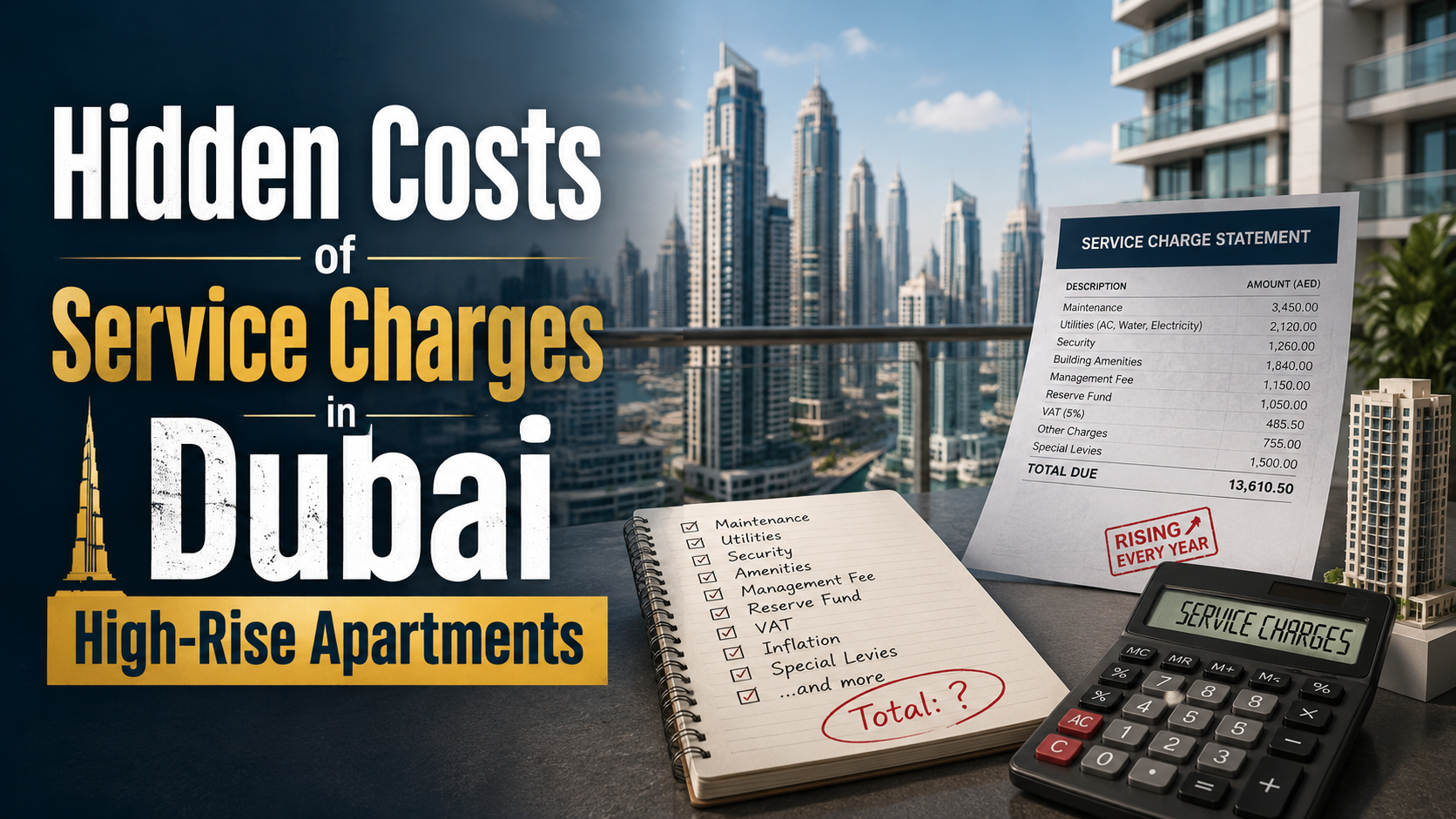
  • Hidden Costs of Service Charges in Dubai High-Rise Apartments: A Complete Buyer and Investor Guide

    Hidden Costs of Service Charges in Dubai High-Rise Apartments: A Complete Buyer and Investor Guide

    Introduction

    Dubai’s high-rise residential market attracts investors and residents with luxury amenities, prime locations, and modern lifestyles. However, many buyers focus primarily on purchase prices, mortgage costs, and rental yields while overlooking a recurring expense that can significantly affect ownership costs: service charges.

    Service charges fund the operation, maintenance, and management of residential buildings. While these fees are disclosed to owners, the indirect and long-term financial implications are often underestimated. Understanding these hidden costs is essential for budgeting, investment analysis, and long-term property ownership.


    Featured Snippet Answer

    What are the hidden costs of service charges in Dubai high-rise apartments?

    The hidden costs of service charges may include increasing annual fees, major maintenance reserves, amenity operating expenses, elevator upgrades, facade repairs, utility costs for common areas, management fees, compliance expenses, vacancy-related carrying costs, and reduced investment returns. These expenses can materially affect the total cost of ownership and rental profitability.


    Key Takeaways

    • Service charges are ongoing ownership costs separate from mortgage payments and utilities.
    • Luxury buildings often have substantially higher operating expenses.
    • Premium amenities can increase annual fees.
    • Future capital expenditures may indirectly affect owners.
    • High service charges can reduce net rental yields.
    • Buyers should evaluate fee history before purchasing.
    • Low purchase prices may sometimes be offset by high recurring charges.

    What Are Service Charges in Dubai?

    Service charges are fees paid by property owners for the operation and maintenance of common areas within a building or community.

    These charges may contribute to:

    • Building maintenance
    • Security services
    • Cleaning
    • Landscaping
    • Elevator maintenance
    • Facility management
    • Shared utilities
    • Swimming pools
    • Gyms
    • Parking infrastructure
    • Building insurance for common areas

    The exact charges vary based on building age, location, size, and amenities.


    Commonly Overlooked Costs

    1. Amenity Operating Expenses

    Luxury towers often feature:

    • Multiple swimming pools
    • Fitness centers
    • Sauna facilities
    • Concierge services
    • Business lounges
    • Children’s play areas

    While attractive to buyers, these facilities require ongoing maintenance, staffing, cleaning, and repairs.

    Hidden Impact

    Owners effectively pay for amenities whether they actively use them or not.


    2. Elevator Maintenance and Modernization

    High-rise towers depend heavily on elevator systems.

    Costs may include:

    • Routine servicing
    • Emergency repairs
    • Component replacement
    • Future modernization projects

    Older towers can experience increasing maintenance requirements that contribute to higher operating costs over time.


    3. Facade Cleaning and Building Exterior Maintenance

    Dubai’s climate presents unique challenges:

    • Heat exposure
    • Sand accumulation
    • Dust storms
    • UV-related wear

    Glass facade cleaning and exterior maintenance can represent a significant recurring expense in tall residential towers.


    4. Common Area Utility Consumption

    Owners indirectly contribute to costs associated with:

    • Corridor lighting
    • Lobby air conditioning
    • Water features
    • Parking ventilation systems
    • Shared electrical infrastructure

    Energy-intensive luxury buildings often generate higher operational expenses.


    5. Facility Management Fees

    Professional management companies oversee:

    • Vendor coordination
    • Budget planning
    • Maintenance scheduling
    • Compliance management
    • Resident support services

    Although necessary for building operations, management fees form a substantial component of annual service charges.


    Risk Factors That Increase Service Charges

    Risk FactorPotential Impact
    Luxury amenitiesHigher operating costs
    Aging building systemsIncreased maintenance spending
    Large common areasGreater cleaning and utility expenses
    Extensive landscapingHigher upkeep requirements
    Premium concierge servicesIncreased staffing costs
    Lower occupancy ratesCost distribution challenges

    How Service Charges Affect Investment Returns

    Many investors focus on gross rental income.

    However, net returns depend on expenses.

    Example

    ItemAnnual Amount
    Rental IncomeAED 100,000
    Service ChargesAED 18,000
    Maintenance ReserveAED 3,000
    Leasing ExpensesAED 2,000
    Net IncomeAED 77,000

    Even modest increases in service charges can materially reduce net yield.


    Hidden Long-Term Financial Risks

    Reserve Fund Contributions

    Buildings often maintain reserves for future major repairs.

    Examples include:

    • Roof repairs
    • Mechanical system upgrades
    • Waterproofing projects
    • Infrastructure replacement

    While these contributions support building longevity, they increase ownership costs.


    Major Building Refurbishments

    As towers age, significant capital projects may become necessary:

    • Lobby renovations
    • HVAC replacement
    • Elevator modernization
    • Parking facility upgrades

    These projects can affect future budgets and service charge levels.


    Vacancy Carrying Costs

    Service charges remain payable even when:

    • A property is vacant
    • A tenant moves out
    • A unit is listed for sale

    Owners must account for these expenses regardless of occupancy status.


    Comparing Low-Rise and High-Rise Ownership Costs

    FeatureLow-Rise BuildingHigh-Rise Building
    Elevator CostsLowHigh
    Security ExpensesModerateHigher
    Facade MaintenanceLowerHigher
    Shared UtilitiesLowerHigher
    Amenity CostsLimitedOften Extensive
    Service Charge VolatilityLowerPotentially Higher

    Due Diligence Before Buying

    Prospective buyers should review:

    Building Financial History

    • Previous service charge trends
    • Annual budgets
    • Reserve allocations
    • Major repair history

    Building Age

    Older properties may face:

    • Equipment replacement cycles
    • Infrastructure upgrades
    • Higher maintenance frequency

    Amenity-to-Unit Ratio

    A building with extensive facilities and relatively few units may result in higher costs per owner.


    Cost Reduction Strategies for Owners

    While owners cannot eliminate service charges, they can:

    • Compare buildings before purchasing
    • Analyze long-term operating costs
    • Evaluate amenity usage realistically
    • Review historical fee increases
    • Consider building age and maintenance condition
    • Assess management efficiency

    Frequently Asked Questions

    Are service charges mandatory in Dubai?

    Yes. Property owners are generally responsible for approved service charges associated with their units.

    Do service charges increase every year?

    Not necessarily. However, changes in maintenance requirements, operating expenses, and building conditions may influence future charges.

    Are luxury buildings always more expensive?

    Often, but not always. Buildings with extensive amenities typically incur higher operating costs.

    Can high service charges affect resale value?

    They can influence buyer demand and overall affordability, particularly when compared with competing properties.

    Are service charges included in mortgage payments?

    Generally, no. Owners usually pay these charges separately.

    Do tenants pay service charges?

    In many cases, owners bear service charges directly, although rental pricing may indirectly reflect these costs.

    Should investors consider service charges when calculating yield?

    Absolutely. Net rental yield provides a more realistic measure of investment performance than gross yield alone.

    Can service charges continue during vacancies?

    Yes. Owners remain responsible for service charges regardless of occupancy status.


    Internal Linking Opportunities

    Related content may include:

    • Dubai property ownership costs
    • Mortgage affordability guides
    • Rental yield calculations
    • Property management strategies
    • Apartment investment due diligence
    • Building maintenance budgeting
    • Dubai real estate investment risks

    Conclusion

    Service charges represent one of the most important recurring expenses associated with owning a Dubai high-rise apartment. While they support building operations, security, maintenance, and amenities, the true financial impact often extends beyond the headline fee. Investors and homebuyers should carefully examine historical charges, building condition, management quality, and long-term maintenance obligations before making a purchase decision. A property with attractive pricing can become significantly more expensive when recurring service costs are fully considered.


    Disclaimer

    This article is provided for informational and educational purposes only and does not constitute legal, financial, tax, investment, or real estate advice. Service charge structures, regulations, and building budgets may change over time. Buyers and investors should conduct independent due diligence and consult qualified property, legal, and financial professionals before making purchasing decisions.

  • The Ultimate Expat Guide to Buying Commercial Real Estate in the UAE

    Introduction

    The UAE has become one of the world’s most attractive destinations for commercial real estate investment. Strong infrastructure, a strategic geographic location, business-friendly regulations, tax advantages, and a growing economy continue to attract expatriate investors seeking office spaces, retail units, warehouses, logistics facilities, and mixed-use commercial assets.

    However, buying commercial property differs significantly from purchasing residential real estate. Ownership regulations, financing structures, lease dynamics, due diligence requirements, tenant risks, and commercial valuation methods require careful analysis.

    This guide explains what expatriates need to know before investing in UAE commercial real estate.


    Featured Snippet Answer

    Can expatriates buy commercial real estate in the UAE?

    Yes. Expatriates can purchase commercial real estate in designated freehold areas across several emirates, particularly Dubai and Abu Dhabi. Investors must conduct legal due diligence, verify title ownership, assess rental income potential, understand financing requirements, and account for transaction costs before completing a purchase.


    Key Takeaways

    • Expats can own commercial property in designated freehold zones.
    • Commercial assets include offices, retail shops, warehouses, clinics, and industrial units.
    • Due diligence is essential before signing any agreement.
    • Commercial mortgages typically require larger down payments than residential loans.
    • Rental yield, tenant quality, location, and lease structure significantly affect returns.
    • Investors should budget for registration fees, service charges, maintenance, and professional advisory costs.
    • Long-term capital appreciation should be evaluated alongside cash flow.

    Understanding Commercial Real Estate in the UAE

    Commercial real estate generally includes:

    • Office spaces
    • Retail units
    • Warehouses
    • Logistics facilities
    • Industrial properties
    • Medical offices
    • Hospitality-related commercial assets
    • Mixed-use commercial developments

    Commercial investments often generate income through business tenants rather than residential occupants.


    Why Expats Invest in UAE Commercial Property

    Strategic Business Hub

    The UAE connects Asia, Europe, and Africa, making it a preferred regional headquarters location.

    Tax Efficiency

    The UAE continues to offer a comparatively attractive tax environment for many international investors.

    Growing Business Ecosystem

    Growth in technology, logistics, tourism, healthcare, and financial services creates demand for commercial premises.

    Strong Infrastructure

    World-class airports, ports, road networks, and digital infrastructure support commercial activity.


    Ownership Options for Expats

    Ownership TypeDescriptionTypical Investor
    FreeholdFull ownership rightsLong-term investors
    LeaseholdLong-term usage rightsCertain commercial users
    Corporate OwnershipProperty held through a companyInstitutional investors
    Free Zone StructuresOwnership linked to free-zone entitiesInternational businesses

    Most Popular Commercial Investment Locations

    Dubai

    Popular areas include:

    • Business Bay
    • DIFC
    • Downtown Dubai
    • Dubai Marina
    • Jumeirah Lake Towers (JLT)
    • Dubai South

    Abu Dhabi

    Common investment destinations include:

    • Al Reem Island
    • Al Maryah Island
    • Yas Island
    • Khalifa Industrial Zone

    Sharjah

    Growing demand exists in industrial and logistics sectors.

    Ras Al Khaimah

    Increasing attention from hospitality and tourism investors.


    Types of Commercial Properties Compared

    Property TypeIncome PotentialRisk LevelManagement Intensity
    OfficeModerate to HighModerateModerate
    RetailHighModerate to HighHigh
    WarehouseStableLowerLower
    Industrial UnitModerateModerateModerate
    Mixed-UseDiversifiedModerateHigher

    Legal Due Diligence Checklist

    Before purchasing:

    • Verify title deed authenticity
    • Confirm seller ownership rights
    • Review zoning regulations
    • Examine building permits
    • Assess tenancy contracts
    • Review service charge history
    • Check outstanding liabilities
    • Verify mortgage encumbrances
    • Review developer reputation
    • Confirm utility compliance

    Financing Options

    Expats may finance commercial property through:

    • UAE commercial mortgages
    • Corporate lending facilities
    • Private banking solutions
    • International financing arrangements
    • Cash purchases

    Commercial Mortgage Considerations

    Lenders typically assess:

    • Income stability
    • Business financials
    • Credit profile
    • Property valuation
    • Loan-to-value ratio
    • Tenant occupancy levels

    Cost Breakdown

    Cost CategoryTypical Purpose
    Property PriceAcquisition cost
    Registration FeesGovernment registration
    Agency CommissionBrokerage services
    Legal FeesContract review and advice
    Valuation FeesProperty appraisal
    Mortgage FeesLoan processing
    Service ChargesBuilding maintenance
    InsuranceAsset protection

    Investors should always obtain current fee schedules before budgeting.


    Risk Factors

    Commercial property investments involve:

    • Tenant default risk
    • Vacancy risk
    • Economic downturns
    • Interest rate changes
    • Market oversupply
    • Regulatory changes
    • Liquidity constraints

    Understanding these risks is essential for realistic return expectations.


    Tenant Evaluation Framework

    Strong tenants often demonstrate:

    • Stable operating history
    • Strong financial records
    • Established market presence
    • Long-term lease commitments
    • Consistent payment history

    Tenant quality can significantly influence property value.


    Commercial Lease Considerations

    Review:

    • Lease duration
    • Renewal clauses
    • Rent escalation provisions
    • Maintenance responsibilities
    • Early termination rights
    • Security deposit requirements

    Longer leases may improve income predictability.


    Investment Strategy Comparison

    StrategyObjectiveTypical Holding Period
    Income-FocusedRental cash flowLong-term
    Value-AddImprove asset valueMedium-term
    Capital AppreciationGrowth potentialLong-term
    RedevelopmentAsset repositioningVariable

    Due Diligence Red Flags

    Potential warning signs include:

    • Incomplete documentation
    • Unusually high promised returns
    • Frequent tenant turnover
    • Significant maintenance issues
    • Legal disputes involving ownership
    • Lack of transparent financial records

    Building a Commercial Property Portfolio

    Many investors diversify across:

    • Multiple emirates
    • Different commercial sectors
    • Various tenant industries
    • Income and growth-oriented assets

    Diversification may help reduce concentration risk.


    Future Trends Shaping UAE Commercial Real Estate

    Key trends include:

    • Growth of logistics facilities
    • Expansion of e-commerce infrastructure
    • Increased demand for flexible offices
    • Smart building technologies
    • Sustainability-focused developments
    • Data center and technology-related investments

    Internal Linking Opportunities

    Related content suggestions:

    • UAE Commercial Mortgage Guide
    • Freehold vs Leasehold Ownership Explained
    • UAE Property Due Diligence Checklist
    • Understanding Service Charges in UAE Real Estate
    • Commercial Lease Negotiation Guide
    • Industrial Property Investment Strategies
    • UAE Free Zone Business Setup Guide

    FAQs

    Can foreigners buy commercial property in Dubai?

    Yes, foreigners can purchase commercial property in designated freehold areas subject to applicable regulations.

    Is commercial property a good investment in the UAE?

    It can be attractive for investors seeking rental income and long-term growth, but returns vary by location, asset quality, and market conditions.

    Can expats obtain commercial mortgages?

    Many banks offer commercial financing, although requirements are often stricter than residential lending.

    What commercial property type offers the most stable income?

    Warehouses and logistics facilities are often viewed as relatively stable, though market conditions vary.

    How important is tenant quality?

    Tenant quality is one of the most important drivers of income stability and asset value.

    What are the biggest risks?

    Vacancies, tenant defaults, market fluctuations, financing costs, and regulatory changes are among the primary risks.

    Should investors buy personally or through a company?

    The optimal structure depends on investment goals, liability considerations, financing needs, and tax planning. Professional advice is recommended.

    How long should commercial property be held?

    Many investors adopt medium- to long-term holding periods to maximize income generation and appreciation potential.


    Conclusion

    Commercial real estate in the UAE offers compelling opportunities for expatriate investors seeking exposure to one of the world’s most dynamic business environments. Success depends on disciplined due diligence, careful market selection, realistic financial analysis, and a thorough understanding of local regulations.

    Rather than focusing solely on headline rental yields, investors should evaluate tenant quality, location fundamentals, financing costs, legal compliance, and long-term economic trends. A structured investment approach can help build a resilient and profitable commercial property portfolio.


    Disclaimer

    This article is provided for educational and informational purposes only and does not constitute legal, financial, tax, investment, or real estate advice. Property regulations, financing criteria, fees, and ownership rules may change over time. Investors should consult qualified legal, tax, banking, and real estate professionals before making investment decisions.

  • Affordable Home Valuation Services in Dubai Before You Buy: Complete 2026 Buyer Guide

    Introduction

    Buying property in Dubai can be one of the largest financial decisions an individual or investor makes. While many buyers focus on location, amenities, and financing, a professional property valuation is often overlooked until late in the purchasing process.

    An independent home valuation provides an objective assessment of a property’s market value. This can help buyers avoid overpaying, strengthen negotiations, satisfy mortgage lender requirements, and identify potential pricing discrepancies before committing to a purchase.

    The good news is that obtaining a professional valuation in Dubai does not necessarily require a large budget. Affordable valuation services are widely available for apartments, villas, townhouses, and investment properties across the emirate.

    This guide explains how home valuation works in Dubai, what it costs, when it is necessary, and how buyers can choose a reputable valuation provider.


    Quick Answer

    A home valuation is an independent assessment of a property’s market value conducted by a qualified valuation professional. In Dubai, affordable valuation services typically range from basic residential assessments to comprehensive reports used for mortgage approvals, investment analysis, and purchase negotiations. Obtaining a valuation before buying can help reduce the risk of overpaying and provide greater confidence during the transaction process.


    Key Takeaways

    • A valuation estimates a property’s fair market value.
    • Mortgage lenders often require independent valuations.
    • Buyers can use valuation reports to negotiate purchase prices.
    • Valuations help identify overpriced listings.
    • Costs vary depending on property type, size, and report complexity.
    • Independent valuation providers may offer more objective assessments.
    • Market conditions significantly influence valuation outcomes.

    What Is a Home Valuation?

    A home valuation is a professional estimate of a property’s current market value based on:

    • Location
    • Property size
    • Layout
    • Building quality
    • Community demand
    • Comparable sales
    • Market trends
    • Rental performance
    • Property condition

    Unlike a seller’s asking price, a valuation aims to reflect what informed buyers are likely willing to pay under current market conditions.


    Why Buyers Should Get a Valuation Before Purchasing

    Many buyers assume that the listed price reflects actual market value. However, asking prices may be influenced by:

    • Seller expectations
    • Market sentiment
    • Limited comparable inventory
    • Investment speculation
    • Emotional pricing decisions

    A professional valuation can help buyers:

    Avoid Overpaying

    An objective assessment may reveal that a property is priced significantly above comparable market transactions.

    Improve Negotiating Power

    Buyers may use valuation findings during price negotiations.

    Support Mortgage Approval

    Banks frequently rely on independent valuations to determine loan amounts.

    Identify Investment Potential

    Investors can evaluate whether projected rental income aligns with the purchase price.

    Reduce Financial Risk

    Valuations provide additional due diligence before committing substantial capital.


    Types of Property Valuation Services in Dubai

    Desktop Valuation

    A desktop valuation relies primarily on available market data without a full site inspection.

    Best For:

    • Initial market research
    • Portfolio reviews
    • Preliminary purchase decisions

    Advantages:

    • Lower cost
    • Faster turnaround

    Limitations:

    • Less detailed
    • May overlook property-specific factors

    Physical Inspection Valuation

    A qualified valuer visits the property and conducts a detailed assessment.

    Best For:

    • Property purchases
    • Mortgage applications
    • High-value investments

    Advantages:

    • Greater accuracy
    • More comprehensive reporting

    Mortgage Valuation

    Typically requested by lenders when financing a property purchase.

    Purpose:

    • Determine lending risk
    • Establish loan-to-value calculations

    Investment Valuation

    Focuses on investment performance metrics such as:

    • Rental yield
    • Occupancy potential
    • Capital appreciation prospects
    • Market demand

    How Property Valuers Determine Market Value

    Professional valuers commonly assess several factors.

    FactorImpact on Value
    LocationStrong
    Community demandStrong
    Property sizeStrong
    ConditionModerate to Strong
    Building ageModerate
    AmenitiesModerate
    View and orientationModerate
    Rental income potentialModerate
    Market trendsStrong

    Common Valuation Methods

    Comparable Sales Method

    The most widely used approach for residential properties.

    Valuers compare:

    • Similar properties
    • Nearby transactions
    • Recent sales data
    • Comparable layouts and sizes

    Income Approach

    Often used for investment properties.

    Valuation is influenced by:

    • Rental income
    • Occupancy rates
    • Operating expenses
    • Yield expectations

    Cost Approach

    Used in certain circumstances where replacement cost analysis is relevant.

    Considers:

    • Land value
    • Construction costs
    • Depreciation factors

    Average Costs of Home Valuation Services in Dubai

    Pricing varies depending on:

    • Property type
    • Location
    • Size
    • Complexity
    • Report requirements
    Property TypeTypical Cost Range
    Studio ApartmentLower range
    ApartmentModerate range
    TownhouseModerate to higher range
    VillaHigher range
    Luxury PropertyPremium pricing

    Actual pricing varies between valuation firms and market conditions.


    How to Find Affordable Home Valuation Services

    When comparing providers, focus on value rather than simply the lowest fee.

    Look for:

    • Qualified valuation professionals
    • Experience in Dubai real estate
    • Transparent pricing
    • Detailed reporting
    • Fast turnaround times
    • Positive client feedback

    Ask About:

    • Inspection fees
    • Additional charges
    • Report delivery timelines
    • Mortgage approval compatibility
    • Revisions or updates

    Red Flags to Watch For

    Not all valuation services provide the same level of reliability.

    Potential warning signs include:

    • Extremely low fees compared with market norms
    • Guaranteed property values
    • Lack of inspection procedures
    • Limited local market knowledge
    • Unclear methodology
    • Absence of professional credentials

    Home Valuation vs Property Appraisal

    FeatureHome ValuationProperty Appraisal
    PurposeEstimate market valueOften supports lending decisions
    ScopeBroad market assessmentFormal lending-focused review
    Buyer UseNegotiation and researchMortgage approval
    Detail LevelVariesUsually standardized

    Factors That Can Increase Property Value

    Several characteristics may positively influence valuation results.

    Location Advantages

    • Waterfront access
    • Metro connectivity
    • Business district proximity
    • School accessibility

    Property Features

    • Renovations
    • Smart-home upgrades
    • Modern finishes
    • Energy efficiency

    Community Benefits

    • Security
    • Recreational facilities
    • Retail access
    • Infrastructure development

    Factors That Can Reduce Value

    Buyers should be aware of issues that may negatively impact valuation outcomes.

    Risk FactorPotential Impact
    Deferred maintenanceLower value
    Oversupply in areaLower demand
    Outdated interiorsReduced buyer interest
    Poor building managementValuation pressure
    Limited amenitiesReduced competitiveness

    Should Cash Buyers Still Get a Valuation?

    Yes.

    Although lenders may not require one, cash buyers can benefit from:

    • Independent pricing verification
    • Negotiation leverage
    • Investment analysis
    • Risk reduction
    • Market benchmarking

    The relatively small valuation fee may help prevent significantly larger purchasing mistakes.


    Frequently Asked Questions

    Is a valuation required before buying property in Dubai?

    Not always. However, lenders frequently require valuations for financed purchases, and independent valuations can help buyers make informed decisions.


    How long does a valuation take?

    Many residential valuations can be completed within several business days, depending on property complexity and inspection scheduling.


    Can a valuation differ from the asking price?

    Yes. Market value and seller expectations may differ substantially.


    Does a higher valuation guarantee future appreciation?

    No. Valuations estimate current market value and do not guarantee future performance.


    Are online valuation tools accurate?

    They can provide rough estimates but typically cannot replace a professional inspection-based valuation.


    Can valuation reports help negotiate a lower price?

    In some cases, yes. Buyers may use valuation findings to support negotiations.


    Is the cheapest valuation service always the best option?

    Not necessarily. Experience, methodology, and report quality are often more important than the lowest fee.


    How often do property values change in Dubai?

    Values may change due to market conditions, interest rates, supply levels, infrastructure developments, and economic trends.


    Suggested Internal Links

    • Dubai Property Buying Guide
    • Mortgage Approval Process in Dubai
    • Off-Plan vs Ready Property Comparison
    • Dubai Rental Yield Guide
    • Property Due Diligence Checklist
    • First-Time Home Buyer Guide UAE
    • Real Estate Investment Strategies in Dubai
    • Understanding Service Charges in Dubai

    Conclusion

    Affordable home valuation services can play a critical role in protecting buyers from overpaying and improving decision-making confidence in Dubai’s competitive real estate market. Whether purchasing a primary residence, holiday home, or investment property, an independent valuation offers objective insight into fair market value and can support both negotiations and financing requirements.

    While valuation costs represent an additional expense, they are often minor compared with the financial consequences of purchasing an overpriced property. By selecting a qualified valuation provider and understanding how valuation reports are produced, buyers can enter transactions with greater transparency, stronger negotiating power, and a clearer understanding of long-term value.

    Disclaimer

    This article is provided for informational and educational purposes only and should not be considered legal, financial, investment, lending, tax, or real estate advice. Property markets can change rapidly, and valuation outcomes may vary based on market conditions, methodology, and individual property characteristics. Buyers should consult qualified real estate professionals, licensed valuers, legal advisors, and financial specialists before making property purchase decisions.

  • Does Buying Property in the UAE Grant You a Golden Visa? Eligibility, Requirements, and Key Rules

    Quick Answer

    Yes, buying qualifying real estate in the UAE can make an investor eligible for a UAE Golden Visa. However, purchasing property does not automatically grant a Golden Visa.

    Applicants must meet the UAE government’s eligibility requirements, which generally include a minimum qualifying property investment value, acceptable ownership documentation, and compliance with residency regulations. Rules may change over time, so investors should verify the latest requirements through official UAE authorities before proceeding.


    Key Takeaways

    • Buying eligible UAE property can support a Golden Visa application.
    • Property ownership alone does not guarantee approval.
    • Minimum investment thresholds and ownership conditions apply.
    • Both completed and, in some circumstances, qualifying off-plan properties may be considered depending on prevailing regulations.
    • Investors should verify current requirements before making a purchase decision.
    • The Golden Visa offers long-term residency benefits but is distinct from citizenship.

    Understanding the UAE Golden Visa

    The UAE Golden Visa is a long-term residency program designed to attract investors, entrepreneurs, skilled professionals, researchers, and other qualifying individuals.

    For real estate investors, the program provides an opportunity to obtain long-term residency based on eligible property investments while maintaining ownership of real estate assets within the country.


    Does Buying Property Automatically Give You a Golden Visa?

    No.

    One of the most common misconceptions among international investors is that purchasing any property automatically results in residency approval.

    In reality, authorities evaluate:

    • Property value
    • Ownership status
    • Documentation
    • Financing arrangements (where applicable)
    • Compliance with immigration requirements
    • Applicant eligibility

    Meeting the investment threshold is only one part of the overall process.


    Property Investment Requirements

    Although requirements may evolve, investors are typically expected to satisfy criteria such as:

    RequirementWhy It Matters
    Minimum qualifying investment valueDemonstrates economic contribution
    Legal ownership documentationConfirms investor rights
    Property registrationVerifies ownership status
    Compliance with residency rulesRequired for approval
    Supporting documentationAssists application review

    Investors should consult official UAE authorities for the most current thresholds and conditions.


    Types of Property That May Qualify

    Depending on prevailing regulations, qualifying property investments may include:

    Residential Apartments

    Popular among investors seeking rental income and long-term appreciation.

    Villas

    Often favored by families relocating to the UAE.

    Townhouses

    A growing segment in master-planned communities.

    Eligible Off-Plan Projects

    Some off-plan investments may qualify if they meet applicable regulatory requirements.


    Freehold Ownership and Golden Visa Eligibility

    Foreign investors generally focus on designated freehold areas where non-UAE nationals can own property.

    Examples of well-known freehold markets include:

    • Dubai
    • Abu Dhabi
    • Ras Al Khaimah

    Ownership structures can affect eligibility, making proper legal review essential before purchasing.


    Can Mortgaged Properties Qualify?

    In certain cases, financed properties may qualify.

    Authorities may consider factors such as:

    • Amount already paid
    • Outstanding mortgage balance
    • Lender documentation
    • Net investor equity

    Because financing rules can change, investors should confirm current requirements before relying on a mortgaged property for Golden Visa eligibility.


    Benefits of a UAE Golden Visa

    Successful applicants may gain several advantages.

    BenefitDescription
    Long-term residencyExtended residence authorization
    Family sponsorship opportunitiesAbility to sponsor eligible family members
    Greater stabilityReduced need for frequent visa renewals
    Business flexibilitySupports entrepreneurial activities
    Enhanced mobilityEasier long-term planning within the UAE

    Benefits remain subject to applicable laws and regulations.


    Common Misconceptions

    Myth 1: Any Property Purchase Qualifies

    Not necessarily. The property must typically satisfy investment and regulatory requirements.

    Myth 2: Approval Is Guaranteed

    Visa approval remains subject to government review.

    Myth 3: The Golden Visa Equals Citizenship

    The Golden Visa is a residency program, not a citizenship-by-investment scheme.

    Myth 4: Investors Must Live Full-Time in the Property

    Residency requirements differ from property occupancy requirements.


    Property Investment vs. Other Golden Visa Pathways

    CategoryTypical Basis
    Property InvestorQualifying real estate investment
    EntrepreneurBusiness ownership or innovation
    Skilled ProfessionalSpecialized expertise
    Researcher or AcademicRecognized achievements
    Exceptional TalentOutstanding contributions in designated fields

    Potential Costs Beyond the Property Price

    Investors should budget for:

    • Registration fees
    • Administrative charges
    • Legal expenses
    • Agency commissions
    • Property maintenance costs
    • Service charges
    • Visa processing fees

    A comprehensive financial review helps avoid unexpected expenses.


    Risks and Considerations

    Before purchasing solely for residency purposes, investors should evaluate:

    Market Risk

    Property values can rise or fall.

    Liquidity Risk

    Real estate may take time to sell.

    Regulatory Changes

    Residency and property regulations may evolve.

    Financing Risk

    Interest rates and lending conditions can change.

    Currency Exposure

    International investors may face exchange-rate fluctuations.


    Frequently Asked Questions

    How much property must I buy to qualify for a UAE Golden Visa?

    The required investment threshold is determined by current UAE regulations. Investors should verify the latest official criteria before purchasing.

    Does buying property guarantee Golden Visa approval?

    No. Meeting property investment requirements does not automatically guarantee approval.

    Can multiple properties be combined?

    Depending on applicable regulations, multiple qualifying properties may sometimes be considered collectively. Applicants should confirm current rules.

    Can off-plan properties qualify?

    Certain off-plan developments may qualify if they meet prevailing eligibility requirements.

    Can a mortgaged property be used for a Golden Visa application?

    Potentially, depending on financing structure and current regulations.

    Can family members be included?

    Many Golden Visa holders can sponsor eligible family members, subject to applicable requirements.

    Is the Golden Visa permanent residency?

    The Golden Visa provides long-term residency but does not generally constitute permanent residency or citizenship.

    Can I sell the property after obtaining the visa?

    Selling a qualifying property could affect ongoing eligibility. Investors should seek professional advice before making ownership changes.


    Internal Linking Opportunities

    Related content may include:

    • UAE property buying guide
    • Freehold vs leasehold ownership in the UAE
    • Dubai property registration process
    • UAE mortgage requirements for expatriates
    • Golden Visa renewal requirements
    • Off-plan property investment guide
    • UAE real estate due diligence checklist

    Conclusion

    Buying property in the UAE can be a pathway to obtaining a Golden Visa, but the process involves more than simply purchasing real estate. Investors must satisfy qualifying investment requirements, maintain appropriate documentation, and comply with applicable residency regulations. Before making a purchase decision, prospective buyers should verify the latest government requirements and seek professional legal and property advice when necessary.


    Disclaimer

    This article is for educational and informational purposes only and should not be considered legal, immigration, tax, or investment advice. UAE property and residency regulations may change. Always consult official UAE authorities and qualified professionals before making investment or immigration decisions.

  • Top 5 Developers in Dubai Known for On-Time Delivery

    Introduction

    For investors and homebuyers in Dubai, project delivery timelines can be just as important as location, price, and amenities. Delayed handovers may affect rental income, financing arrangements, and overall investment returns. As Dubai’s property market continues to attract global capital, developers with a reputation for delivering projects on schedule often enjoy stronger buyer confidence and market credibility.

    This guide highlights five of the most recognized developers in Dubai that have built reputations for efficient project execution, strong construction management, and consistent delivery performance.


    Featured Snippet Answer

    Which developers in Dubai are known for on-time delivery?

    Among the most widely recognized developers for reliable project execution and timely handovers in Dubai are:

    1. Emaar Properties
    2. Dubai Properties
    3. Sobha Realty
    4. Meraas
    5. Danube Properties

    While no developer can guarantee that every project will be delivered exactly on schedule, these companies are generally associated with strong delivery records, established construction processes, and significant market experience.


    Key Takeaways

    • Timely project delivery is a major factor affecting investment performance.
    • Larger, established developers typically have stronger construction and financing capabilities.
    • Delivery timelines can still be affected by regulatory approvals, contractor issues, and market conditions.
    • Buyers should evaluate individual projects rather than relying solely on a developer’s brand reputation.
    • Reviewing previous handover history is an important part of due diligence.

    Why On-Time Delivery Matters

    On-time project completion can influence:

    • Rental income generation
    • Mortgage planning
    • Capital appreciation timing
    • Investor confidence
    • Occupancy schedules
    • Resale opportunities

    Projects delivered according to announced schedules often reduce uncertainty for both end-users and investors.


    Top 5 Developers in Dubai Known for On-Time Delivery

    1. Emaar Properties

    Overview

    Emaar is one of Dubai’s most recognizable developers and the company behind several landmark communities and mixed-use developments.

    Strengths

    • Extensive development experience
    • Large-scale project management capabilities
    • Strong financial position
    • Established contractor network
    • Comprehensive master-planned communities

    Notable Developments

    • Downtown Dubai
    • Dubai Marina
    • Dubai Hills Estate

    Best For

    • Long-term investors
    • Luxury property buyers
    • International purchasers

    2. Dubai Properties

    Overview

    Dubai Properties has developed numerous residential and mixed-use communities across the emirate.

    Strengths

    • Large community developments
    • Government-linked backing
    • Established delivery framework
    • Diverse housing portfolio

    Notable Developments

    • Jumeirah Beach Residence
    • Business Bay

    Best For

    • Family-oriented buyers
    • Mid- to upper-market investors
    • Community-focused living

    3. Sobha Realty

    Overview

    Sobha Realty is known for maintaining significant control over construction quality through a vertically integrated business model.

    Strengths

    • High construction standards
    • Direct oversight of development processes
    • Premium residential focus
    • Strong quality-control systems

    Notable Developments

    • Sobha Hartland
    • Hartland II

    Best For

    • Luxury buyers
    • Quality-focused investors
    • Premium rental property investors

    4. Meraas

    Overview

    Meraas has become known for creating lifestyle-oriented destinations and mixed-use communities throughout Dubai.

    Strengths

    • Innovative community design
    • Strong project management
    • Prime locations
    • High market demand

    Notable Developments

    • City Walk
    • Bluewaters Island
    • Port de La Mer

    Best For

    • Lifestyle-focused buyers
    • Short-term rental investors
    • Premium residential purchasers

    5. Danube Properties

    Overview

    Danube Properties has gained attention for delivering a large number of mid-market and affordable residential projects.

    Strengths

    • Active project pipeline
    • Competitive pricing
    • Strong investor appeal
    • Broad market accessibility

    Notable Developments

    • Various residential projects across emerging Dubai communities
    • Mid-market apartment developments

    Best For

    • First-time investors
    • Budget-conscious buyers
    • Yield-focused purchasers

    Developer Comparison Table

    DeveloperMarket SegmentTypical Buyer ProfileKey Strength
    Emaar PropertiesPremium to LuxuryGlobal investorsScale and experience
    Dubai PropertiesMid to PremiumFamiliesCommunity development
    Sobha RealtyLuxuryQuality-focused buyersConstruction quality
    MeraasPremium LifestyleLifestyle investorsPrime destinations
    Danube PropertiesAffordable to Mid-MarketFirst-time investorsValue proposition

    Factors That Influence Project Delivery

    Even highly reputable developers may face challenges that affect timelines.

    FactorPotential Impact
    Regulatory approvalsDelayed handovers
    Labor availabilityConstruction slowdowns
    Supply chain disruptionsMaterial shortages
    Design modificationsTimeline extensions
    Infrastructure coordinationCompletion delays
    Economic conditionsResource allocation changes

    How to Evaluate a Developer’s Delivery Record

    Before purchasing off-plan property, consider:

    Review Past Projects

    Look at:

    • Original launch dates
    • Construction progress
    • Actual handover dates

    Assess Financial Strength

    Developers with stronger balance sheets often have greater flexibility during market fluctuations.

    Examine Construction Progress

    Regular site updates can indicate project momentum and execution quality.

    Verify Escrow Compliance

    Dubai’s regulatory framework helps provide additional protections for off-plan buyers.


    Common Buyer Questions

    Is a larger developer always more reliable?

    Not necessarily. Large developers often have greater resources, but smaller developers may also achieve strong delivery performance on selected projects.

    Can project completion dates change?

    Yes. Construction timelines can be affected by factors beyond a developer’s direct control.

    Should investors prioritize delivery history over price?

    Delivery history should be one of several factors considered alongside location, quality, pricing, and long-term market demand.

    Are off-plan projects riskier than completed properties?

    Off-plan investments generally involve more timeline uncertainty than ready properties, although they may offer pricing advantages.


    FAQs

    Which Dubai developer has the strongest reputation globally?

    Emaar Properties is often considered among the most internationally recognized Dubai developers due to its landmark projects and global presence.

    Are government-linked developers safer investments?

    Government-linked developers may benefit from greater institutional support, but every project should be evaluated independently.

    What is considered an acceptable project delay?

    There is no universal standard. Buyers should review contractual terms and project-specific commitments.

    Do luxury developers deliver faster?

    Not always. Luxury projects may involve complex designs that can extend construction timelines.

    How can investors track construction progress?

    Developers often publish updates, while regulatory resources and site inspections can provide additional information.

    Does on-time delivery affect resale value?

    Projects completed as expected may strengthen buyer confidence and improve marketability.

    Should foreign investors focus on developer reputation?

    Yes. Developer track record is an important consideration for international buyers who may have limited local market familiarity.


    Internal Linking Opportunities

    Consider linking to related content such as:

    • Dubai Off-Plan Property Guide
    • Dubai Property Investment Strategies
    • Best Areas to Buy Property in Dubai
    • Dubai Mortgage Options for Expats
    • Understanding Dubai Escrow Regulations
    • Rental Yield Analysis in Dubai

    Conclusion

    Dubai’s property market offers opportunities across luxury, premium, and affordable segments. Developers such as Emaar Properties, Dubai Properties, Sobha Realty, Meraas, and Danube Properties have built strong reputations through large-scale development experience and consistent project execution. While past performance does not guarantee future outcomes, evaluating a developer’s delivery history, financial strength, and construction track record can help investors make more informed decisions.

    Disclaimer

    This article is for informational and educational purposes only and should not be considered financial, legal, investment, or real estate advice. Property investment decisions should be based on independent due diligence, professional consultation, and review of project-specific documentation.

  • Complete Cost Breakdown of Furnishing an Apartment for Holiday Homes: Budget, Luxury & ROI Guide

    Introduction

    Furnishing a holiday home is one of the most important investments a short-term rental owner can make. Guests often decide whether to book a property within seconds based on photos, amenities, and perceived comfort. A well-furnished apartment can improve occupancy rates, command higher nightly rates, generate better reviews, and reduce vacancy periods.

    However, many owners underestimate the true cost of furnishing a holiday rental. Beyond beds and sofas, expenses often include appliances, décor, kitchen equipment, smart-home technology, linens, maintenance supplies, and replacement budgets.

    This guide provides a comprehensive breakdown of furnishing costs, budgeting strategies, and return-on-investment considerations for holiday home operators. The topic originates from the supplied article brief.


    Featured Snippet Answer

    The cost of furnishing a holiday home apartment typically ranges from approximately $5,000–$15,000 for a basic setup, $15,000–$35,000 for a mid-range setup, and $35,000+ for a luxury furnishing package. Total costs depend on apartment size, target guest profile, quality of furnishings, and desired amenities.


    Key Takeaways

    • Furniture is usually the largest furnishing expense.
    • Durable commercial-grade products often provide better long-term value.
    • Smart locks, high-speed internet, and workspace amenities are increasingly expected.
    • Quality bedding and mattresses significantly influence guest reviews.
    • Owners should budget for ongoing replacements and maintenance.
    • Luxury furnishing does not always guarantee higher profitability.
    • Furnishing decisions should align with the target rental market.

    Major Furnishing Cost Categories

    1. Living Room Furnishing Costs

    The living area creates the first impression for guests.

    ItemBudget Range
    Sofa$400–$2,500+
    Coffee table$80–$600
    TV unit$100–$800
    Television$250–$2,000+
    Rugs$100–$1,000
    Lighting$50–$500
    Decorative accessories$100–$1,000

    Estimated Total: $1,000–$8,000+


    2. Bedroom Furnishing Costs

    Bedrooms often influence guest satisfaction more than any other room.

    ItemBudget Range
    Bed frame$200–$1,500
    Mattress$300–$2,500
    Nightstands$80–$600
    Wardrobe/storage$200–$2,000
    Bedding sets$100–$800
    Curtains/blinds$100–$1,000

    Estimated Total Per Bedroom: $1,000–$8,000+


    3. Kitchen Setup Costs

    Guests increasingly expect fully equipped kitchens.

    ItemBudget Range
    Refrigerator$400–$2,500
    Stove/cooktop$250–$2,000
    Microwave$50–$500
    Cookware$100–$800
    Dinnerware$100–$600
    Small appliances$100–$1,000

    Estimated Total: $1,000–$7,500+


    4. Dining Area Costs

    ItemBudget Range
    Dining table$200–$2,500
    Dining chairs$150–$2,000
    Lighting fixture$50–$800

    Estimated Total: $400–$5,000+


    5. Bathroom Setup Costs

    ItemBudget Range
    Towels$100–$500
    Storage solutions$50–$400
    Mirrors$50–$500
    Accessories$50–$300

    Estimated Total: $250–$1,700+


    6. Smart Technology & Guest Convenience

    Modern travelers increasingly expect technology-enabled stays.

    AmenityTypical Cost
    Smart lock$100–$500
    Wi-Fi router$50–$300
    Smart thermostat$100–$400
    Security camera (external)$50–$500
    Streaming devices$30–$150

    Estimated Total: $300–$1,850+


    Cost Comparison by Furnishing Level

    CategoryBudget SetupMid-Range SetupLuxury Setup
    Studio Apartment$5,000–$10,000$10,000–$20,000$20,000–$50,000+
    One-Bedroom$7,000–$15,000$15,000–$30,000$30,000–$60,000+
    Two-Bedroom$10,000–$25,000$25,000–$45,000$45,000–$90,000+

    Hidden Costs Many Owners Miss

    Initial Inventory

    Guests expect more than furniture.

    Common overlooked expenses include:

    • Extra bedding
    • Spare towels
    • Cleaning supplies
    • Hair dryers
    • Irons and ironing boards
    • Welcome packages
    • Kitchen consumables
    • Replacement inventory

    Typical Cost: $300–$2,000+


    Professional Design Services

    Some owners hire interior designers to create a premium guest experience.

    ServiceEstimated Cost
    Design consultation$200–$2,000
    Full furnishing project$2,000–$15,000+

    Delivery and Assembly

    Furniture delivery and installation can significantly increase total project costs.

    Typical Budget: 5–15% of furnishing spend.


    Factors That Influence Furnishing Costs

    Property Size

    Larger apartments naturally require:

    • More furniture
    • More décor
    • Additional appliances
    • Greater linen inventory

    Target Market

    Budget Travelers

    • Functional furnishings
    • Cost-efficient appliances
    • Minimal décor

    Families

    • Durable furniture
    • Extra sleeping capacity
    • Child-friendly features

    Business Travelers

    • Fast Wi-Fi
    • Workspace setup
    • Smart technology

    Luxury Guests

    • Premium finishes
    • Designer furnishings
    • High-end appliances

    Return on Investment (ROI)

    Well-designed holiday homes may benefit from:

    • Higher nightly rates
    • Improved occupancy
    • Better guest reviews
    • Increased repeat bookings
    • Stronger platform rankings

    However, excessive furnishing expenditure does not always produce proportional rental income. Owners should evaluate expected rental demand and local competition before investing in luxury upgrades.


    Furnishing Strategy: Buy Cheap or Buy Durable?

    FactorBudget FurnitureDurable Furniture
    Initial CostLowerHigher
    Replacement FrequencyHigherLower
    Guest ExperienceVariableOften Better
    Long-Term CostPotentially HigherOften Lower
    Professional AppearanceModerateStrong

    For high-occupancy holiday homes, durability often provides better long-term value.


    Common Mistakes to Avoid

    1. Buying residential-grade furniture for heavy guest use.
    2. Ignoring mattress quality.
    3. Underestimating replacement costs.
    4. Over-decorating small spaces.
    5. Failing to provide adequate storage.
    6. Choosing difficult-to-clean materials.
    7. Ignoring guest technology expectations.

    Frequently Asked Questions

    How much should I budget to furnish a holiday home apartment?

    Most owners should expect to spend between $10,000 and $30,000 for a professionally furnished one-bedroom holiday rental, depending on quality and location.

    Is luxury furniture necessary?

    Not always. The furnishing level should match guest expectations and local market positioning.

    Which room deserves the highest budget?

    Bedrooms often provide the greatest impact on guest satisfaction because sleep quality heavily influences reviews.

    How often should furniture be replaced?

    High-use items may require replacement every few years, while durable furnishings can last significantly longer with proper maintenance.

    Should I hire an interior designer?

    Professional design may be beneficial in competitive markets where presentation directly affects booking performance.

    What amenities generate the best guest reviews?

    Commonly appreciated features include comfortable mattresses, reliable Wi-Fi, smart entry systems, quality linens, and well-equipped kitchens.

    How much should I reserve for ongoing replacements?

    Many operators maintain an annual reserve fund to cover wear-and-tear, damaged items, and periodic upgrades.


    Internal Linking Opportunities

    Consider linking this article with content covering:

    • Holiday home management costs
    • Short-term rental licensing requirements
    • Property maintenance budgeting
    • Vacation rental marketing strategies
    • Smart-home technology for rentals
    • Maximizing occupancy rates
    • Interior design trends for hospitality properties

    Conclusion

    The complete cost of furnishing an apartment for holiday homes extends far beyond purchasing furniture. Owners must account for appliances, décor, technology, linens, maintenance supplies, delivery fees, and future replacements. While costs vary widely based on property size and market positioning, a strategic furnishing plan can improve guest satisfaction, strengthen occupancy rates, and enhance long-term investment performance.


    Disclaimer

    This article is intended for educational and informational purposes only. Costs vary significantly by country, city, supplier, market conditions, property size, and furnishing quality. Property owners should obtain current quotations and professional advice before making investment decisions.